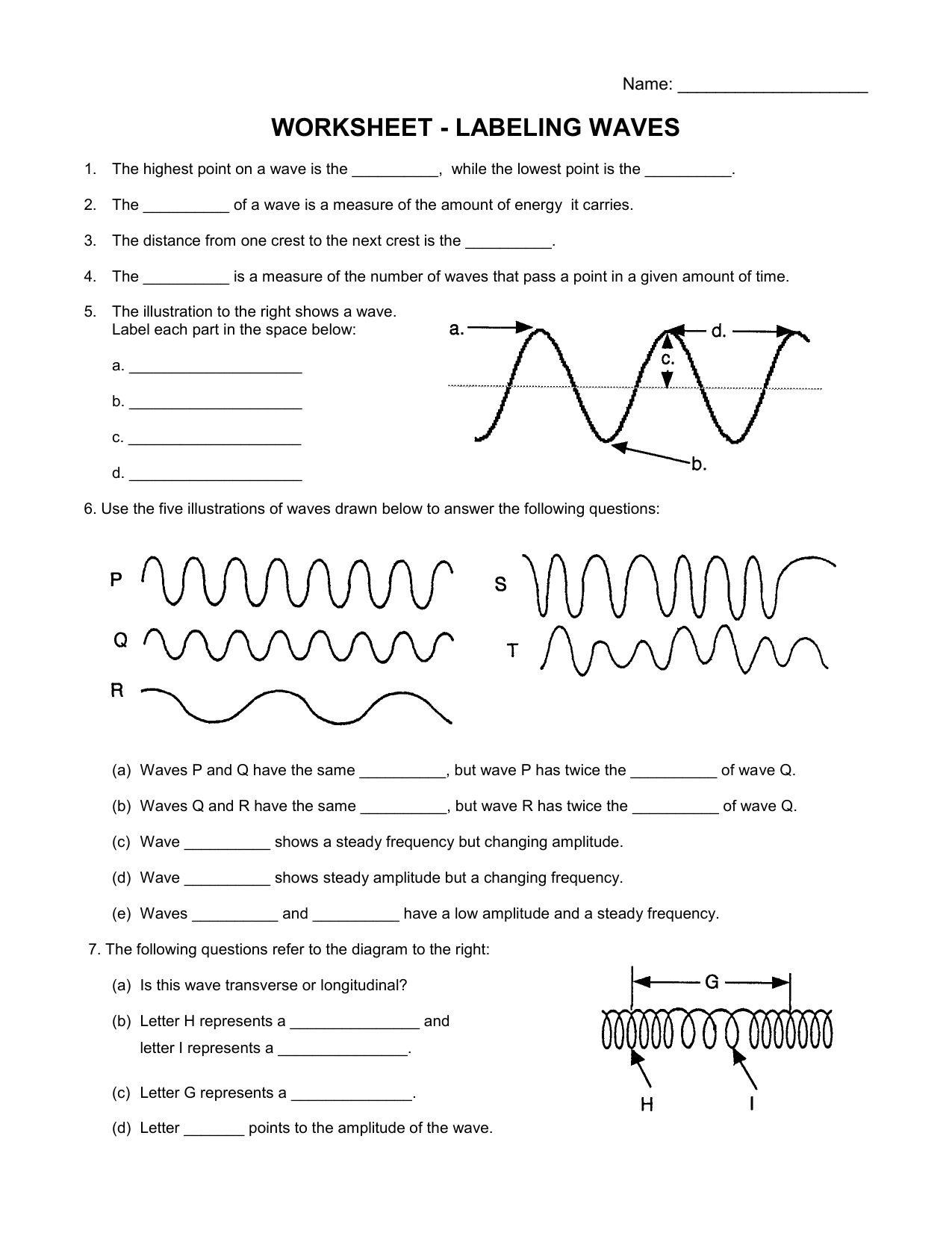

Waves refraction is a fundamental concept in physics that explains how wave energy changes direction as it moves from one medium to another with varying wave speeds. This phenomenon occurs due to differences in water depth, density, or other physical properties, causing waves to bend and alter their path. Understanding wave refraction is essential across many fields—from oceanography and coastal engineering to optics and seismic studies. A *Waves Refraction Worksheet Answers* provides learners with guided practice to master the underlying principles, including Snell’s Law, critical angles, and real-world applications. By working through structured problems, students develop intuition about how wave behavior adapts to environmental changes, forming a solid foundation for advanced scientific inquiry. The worksheet typically includes calculations, diagram interpretations, and conceptual explanations designed to reinforce learning through repetition and application.
| Concept | Explanation | Key Formula |
|---|---|---|
| Refraction Definition | Bending of waves as they pass between media with different propagation speeds | n₁ sinθ₁ = n₂ sinθ₂ (Snell’s Law) |
| Critical Angle | Minimum angle of incidence at which total internal reflection begins | sinθ_c = n₂/n₁ (when θ₂ = 90°) |
| Medium Transition | Change in depth or medium alters wave speed and direction | v ∝ 1/√n (refractive index n) |
To effectively learn wave refraction, a well-structured Waves Refraction Worksheet Answers guides students through step-by-step problem solving. These answers typically break down complex scenarios into manageable parts, helping learners visualize how wavefronts shift when encountering boundaries between different materials. For example, when a wave travels from deep to shallow water, its speed decreases, causing the wavefront to bend toward the normal. This bending follows predictable patterns governed by Snell’s Law, where the ratio of sines of the angles equals the inverse ratio of refractive indices. Mastery comes not just from memorizing formulas but from applying them to realistic situations involving varying depths, currents, or material interfaces.
Note: Accurate measurement of angles and precise identification of medium properties are crucial for correct refraction calculations.
A key insight from refraction worksheets is recognizing that wave refraction is not limited to water—similar principles apply to light, sound, and seismic waves, making the concepts broadly transferable across physics disciplines.
Students often find it helpful to sketch wave paths before and after refraction to build spatial understanding, especially when analyzing critical angles and energy concentration zones.
| Common Application Areas | Description | Example |
|---|---|---|
| Ocean Waves | Waves slow near coasts, causing them to converge and increase height | Coastal erosion and surf zone dynamics |
| Optics | Light bends when entering lenses or atmospheric layers with varying density | Lens focusing, mirages, atmospheric refraction |
| Seismology | Earthquake waves refract through Earth’s layered interior | Shadow zones and travel-time curves |
Understanding refraction helps engineers design safer harbors and more efficient optical instruments by predicting wave behavior under changing conditions.
The iterative process of solving refraction problems strengthens analytical thinking and reinforces the connection between theory and observable phenomena.
Waves refraction reveals nature’s elegant adaptation to environmental gradients, where energy conservation dictates smooth transitions rather than abrupt stops. Through consistent practice using a reliable Waves Refraction Worksheet Answers, learners internalize the relationship between wave speed, angle, and medium properties. This knowledge empowers them to predict wave motion in diverse settings, from ocean shorelines to medical imaging technologies. As students progress, they discover that refraction is not merely a mathematical exercise but a window into the dynamic interplay between waves and their surroundings—a cornerstone of applied physics with lasting relevance across scientific domains.